
Close-range hand-wave switch
The user deliberately passes a hand near the sensor to change the light state. Define the gesture, sensor location and whether any hold action is required.
MY MIRROR PLUS / Contactless controls
Develop hands-free LED mirrors around the way your customers use the bathroom. Review infrared hand-wave switching and approach-based control requirements for wholesale, hospitality and OEM/ODM ranges.
Try the Sensor SequenceChoose the behaviour
The user deliberately passes a hand near the sensor to change the light state. Define the gesture, sensor location and whether any hold action is required.
The brief calls for the light to respond to a user entering the intended area. Define detection direction, retrigger behaviour and delayed-off requirements for technical review.
LED mirror collection
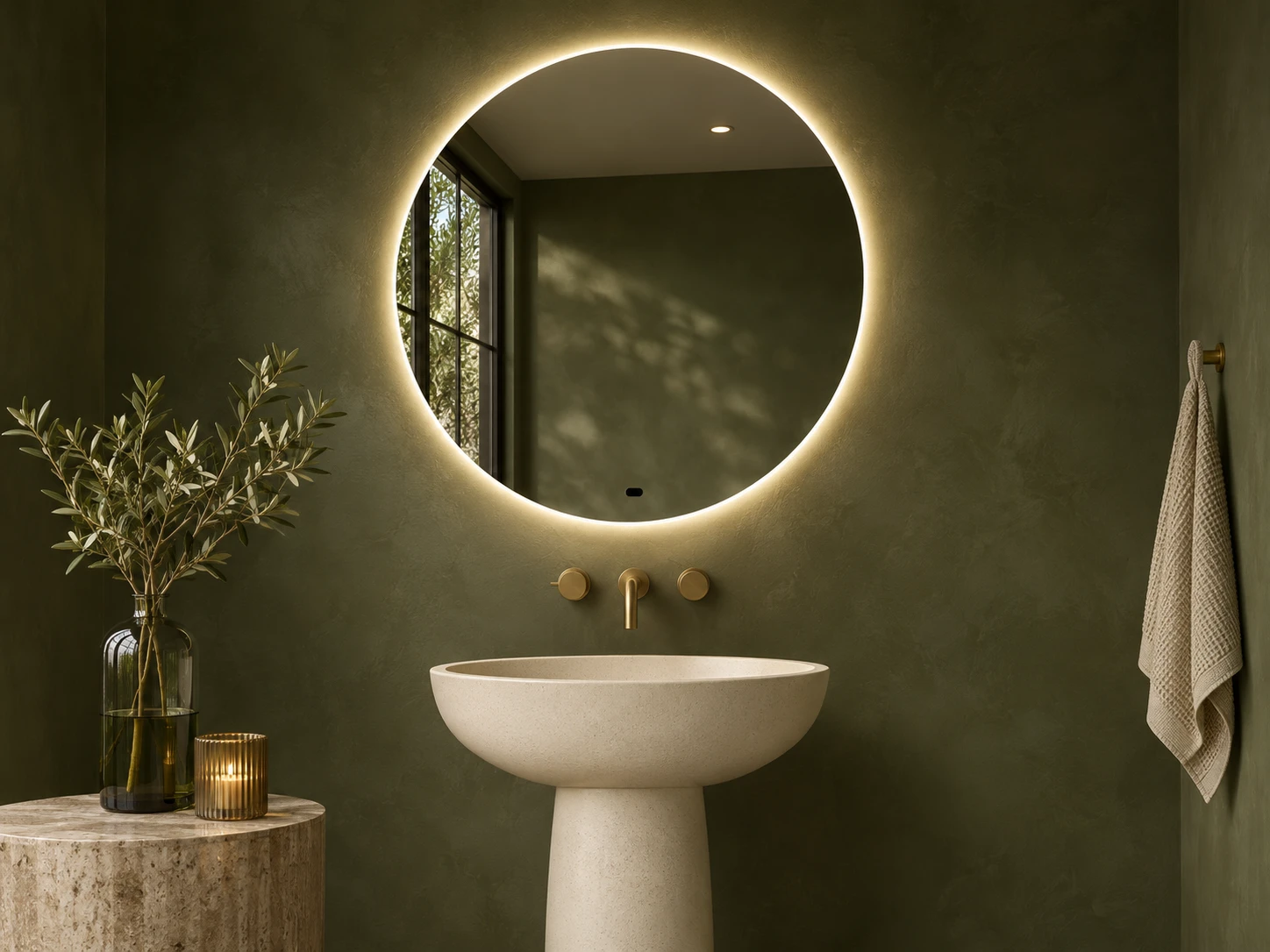
Backlit / Sensor option
A circular mirror for a single basin. Review the sensor position and the user approach against the vanity elevation.
Specify This Design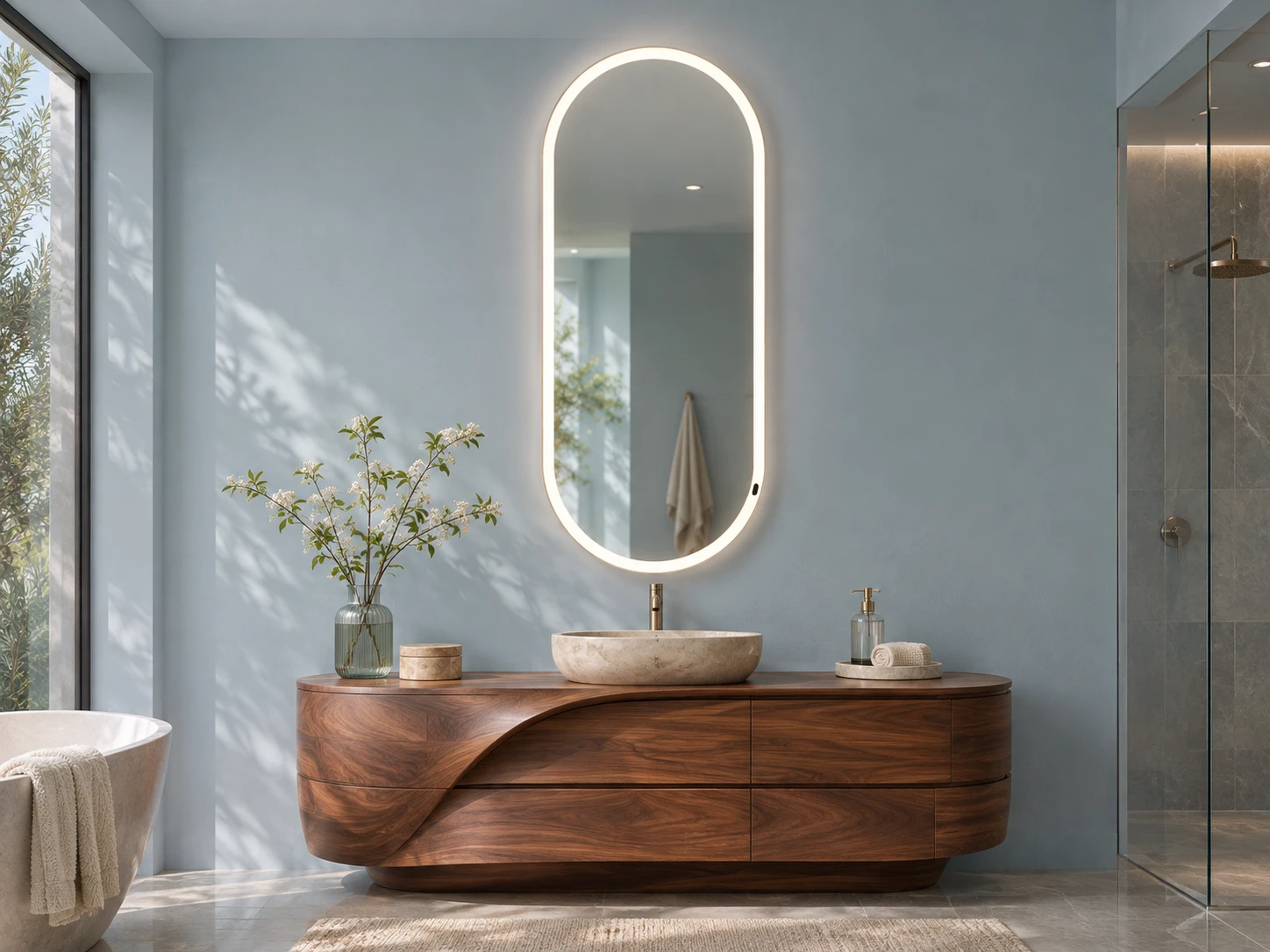
Front-lighted / Sensor option
A tall light band with a discreet lower sensor location. Check the gesture space around the tap, shelf and basin.
Specify This Design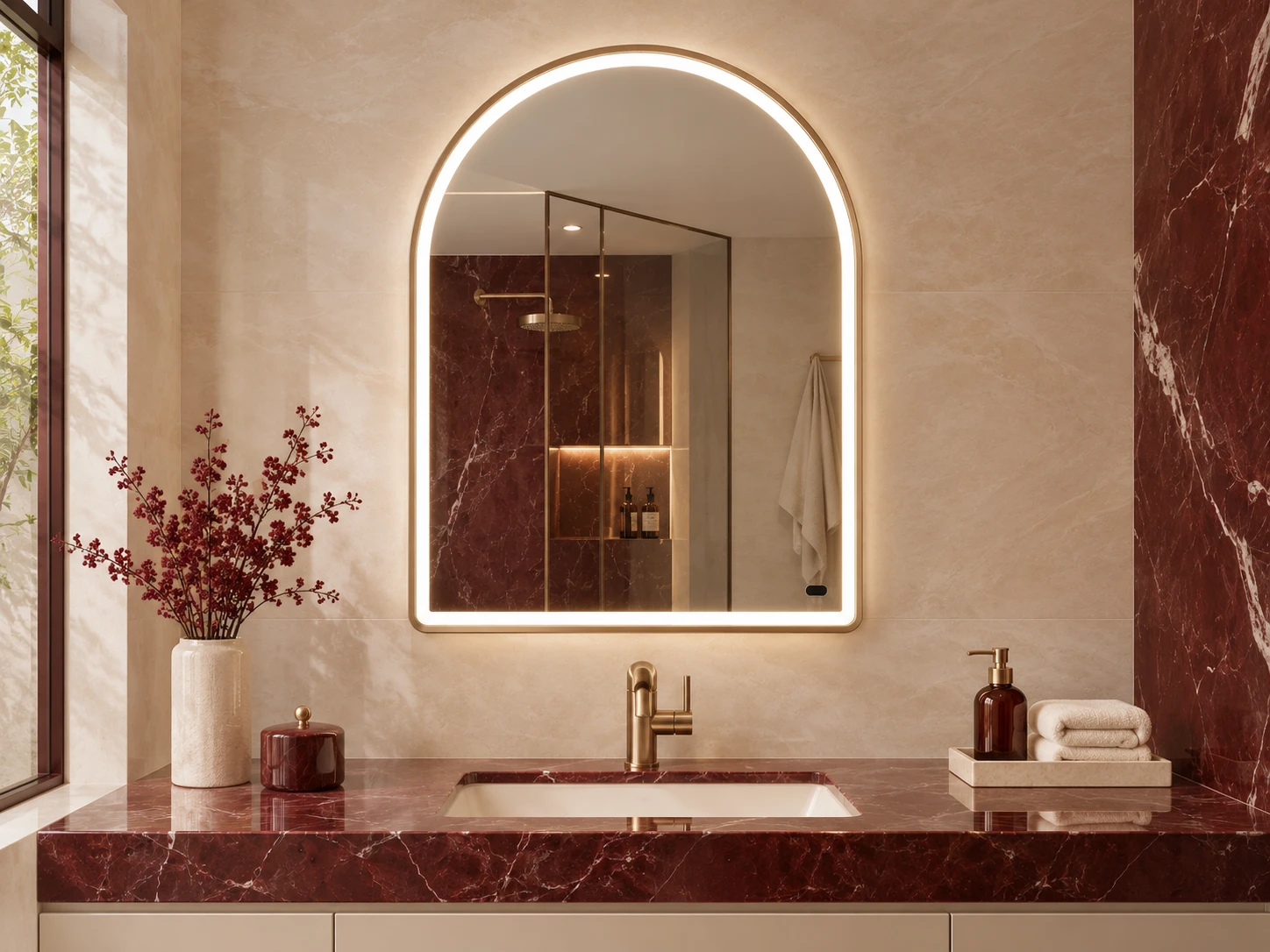
Front-lighted / Sensor option
A champagne frame for a softer hospitality palette. Coordinate the sensing window with the glass, profile and rear assembly.
Specify This Design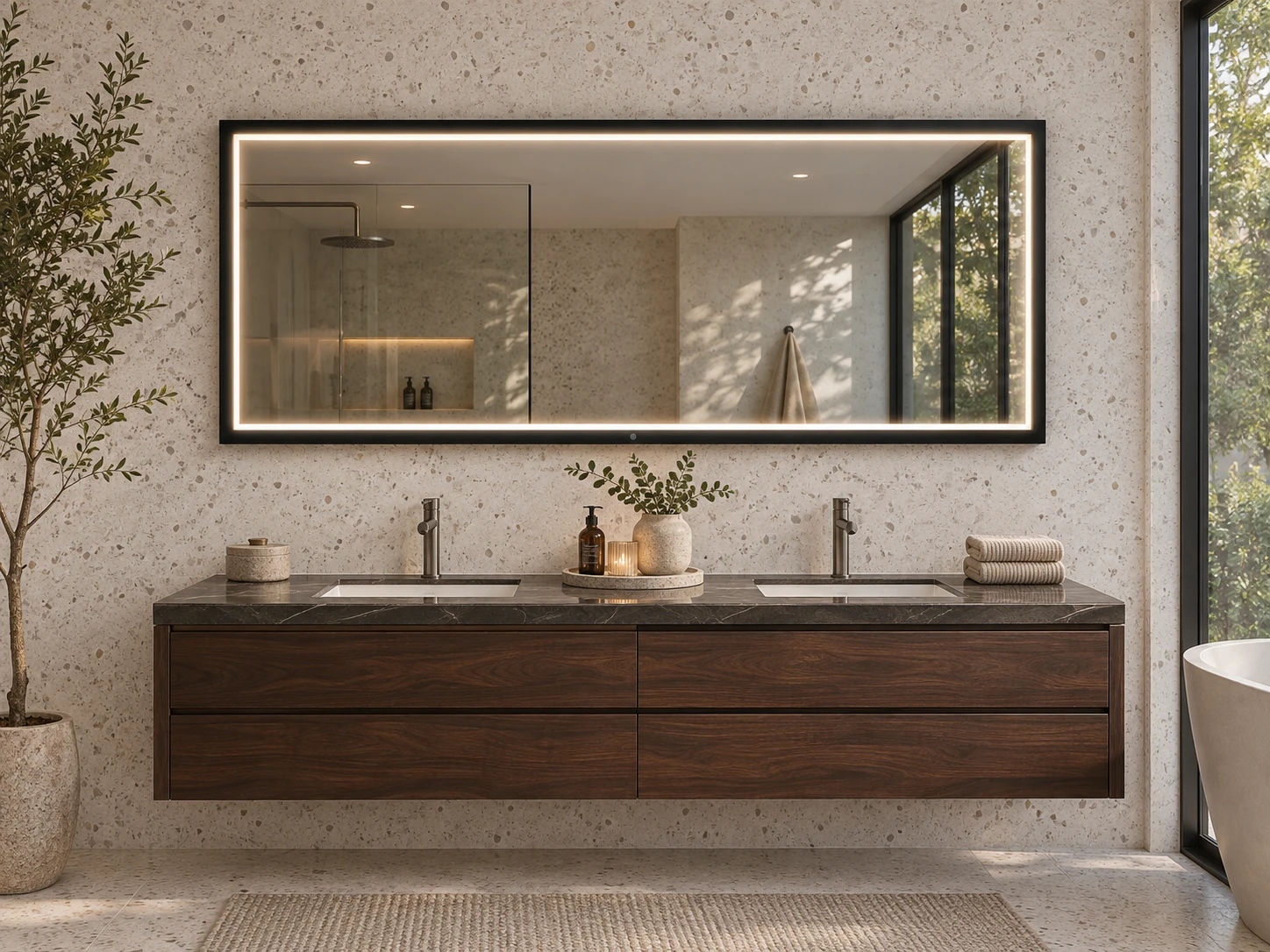
Front-lighted / Sensor option
A shared vanity format. Define who should activate the mirror and whether the operating sequence is shared across the whole unit.
Specify This DesignConcept renders show design directions. Sensing technology, component location and control operation are confirmed model by model.
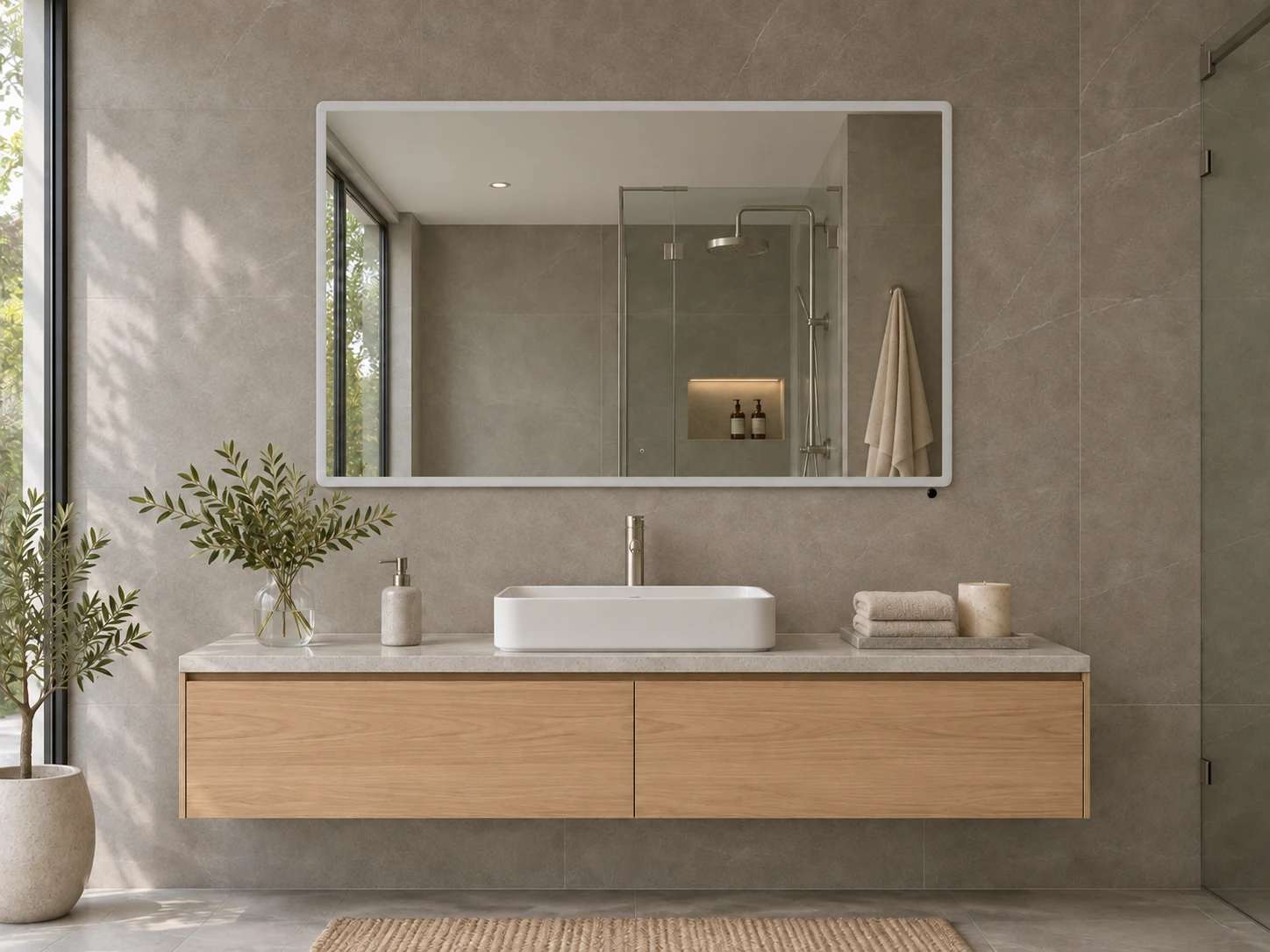
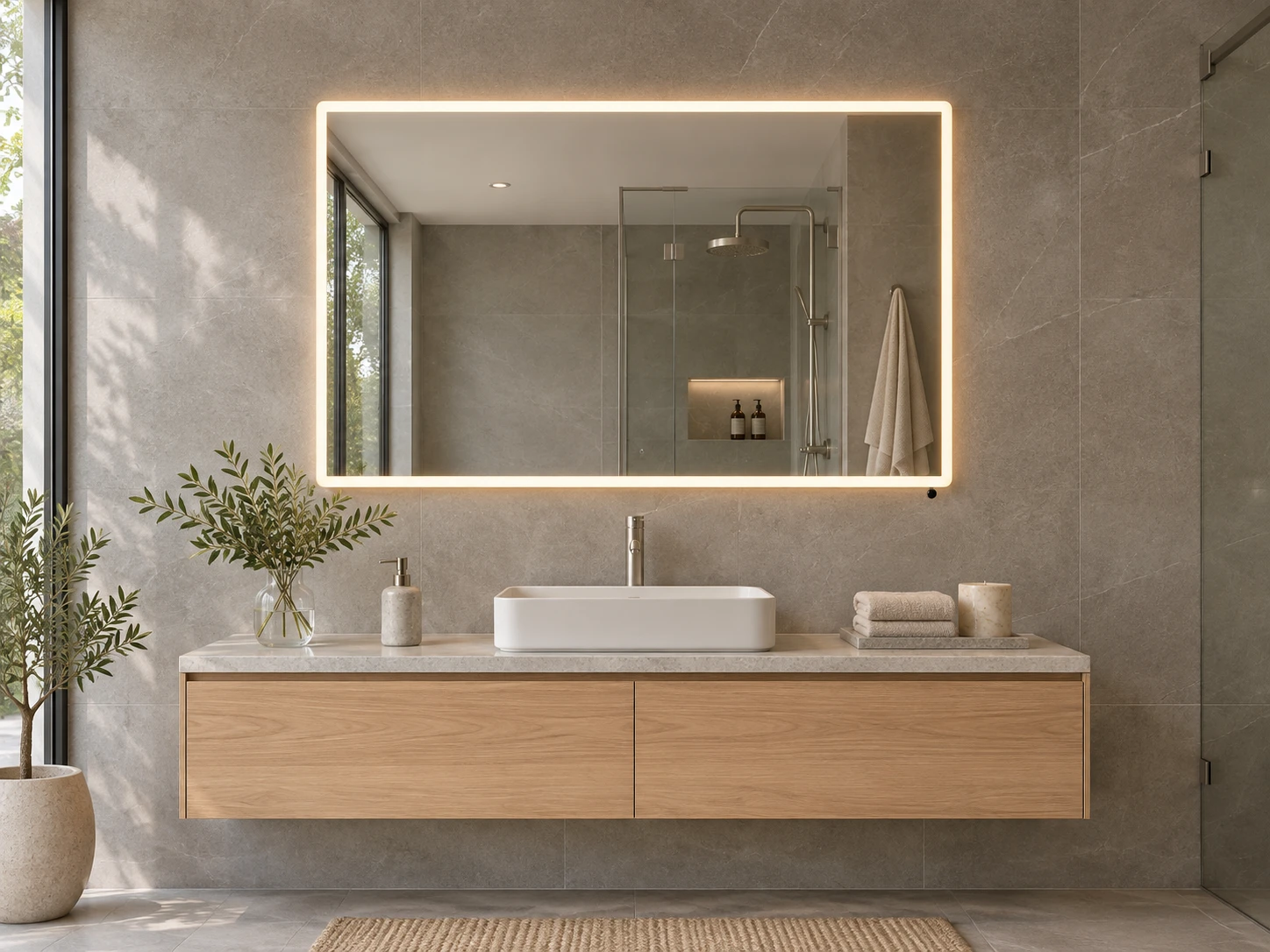 LED OFF
Each simulated wave toggles the light.
Photo-based demonstration. The 5-second countdown is for this preview; actual sensing, range and delay require product-specific approval.
Interactive sequence
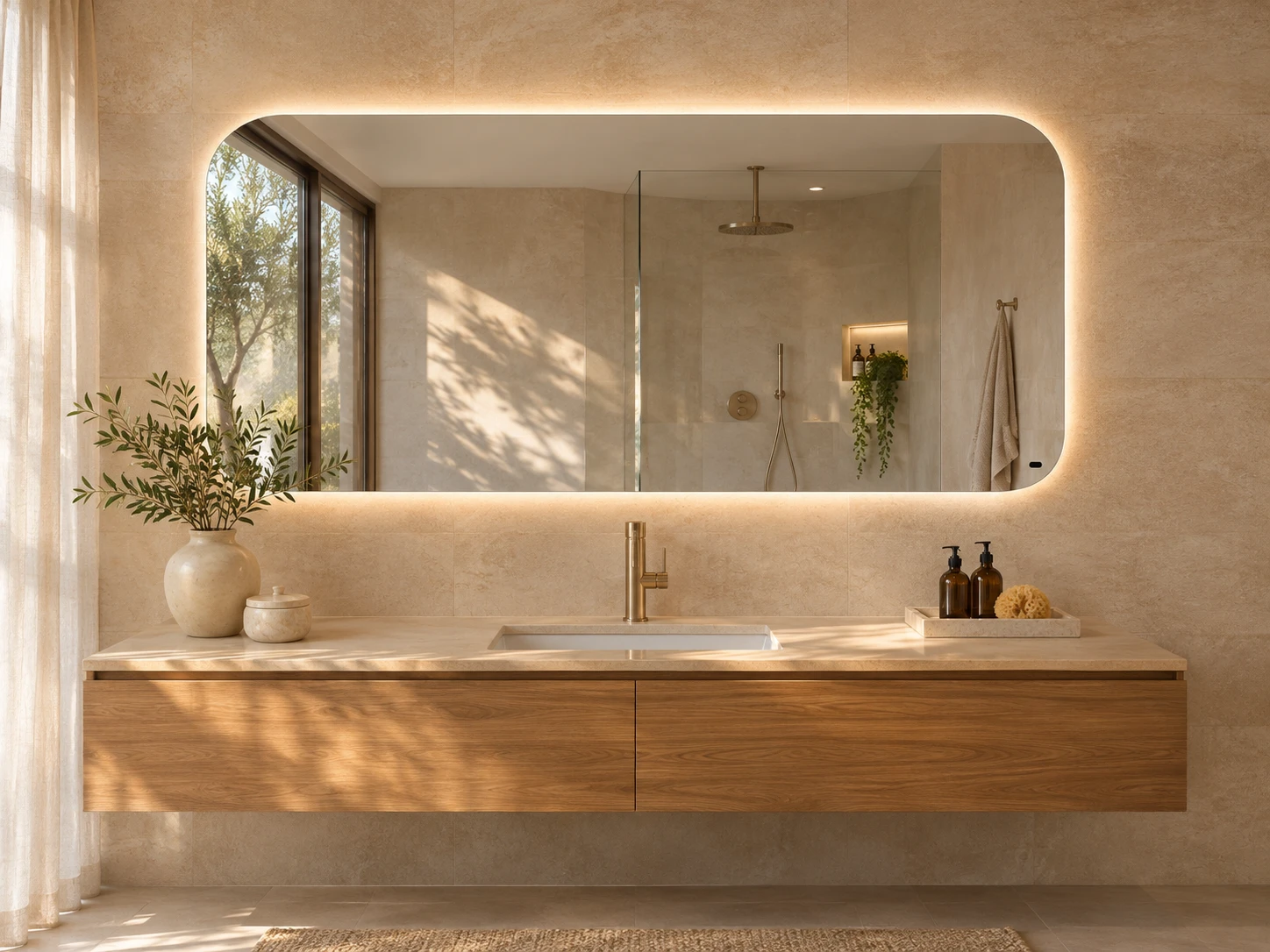
Simulate a wave to switch the photographed mirror on. A second wave switches it off.
Your chosen operating requirement is carried into the quotation form.
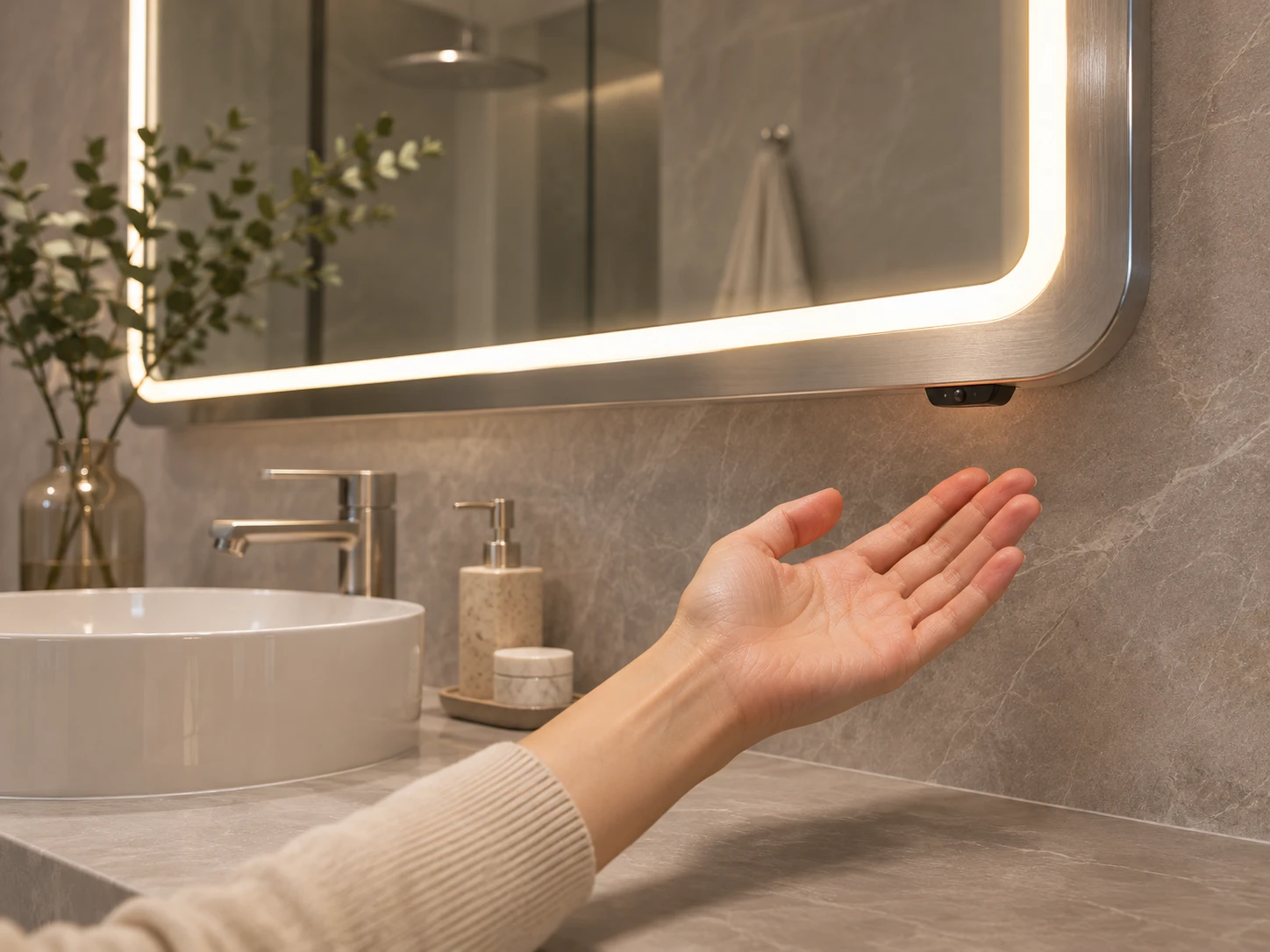
Sensor placement
A hands-free bathroom mirror needs a practical sensing position. Review the lower edge, side edge or prepared front window against the actual vanity and the proposed component.
Installation planning
Provide mirror height, basin position, tap projection and nearby storage. Mark the intended user and gesture position.
For approach-based control, show the entry route and the area that should activate the light. Confirm the selected sensor arrangement in a mock-up.
Coordinate the sensor, controller, driver and wall switching. State the required behaviour after the wall supply is restored.
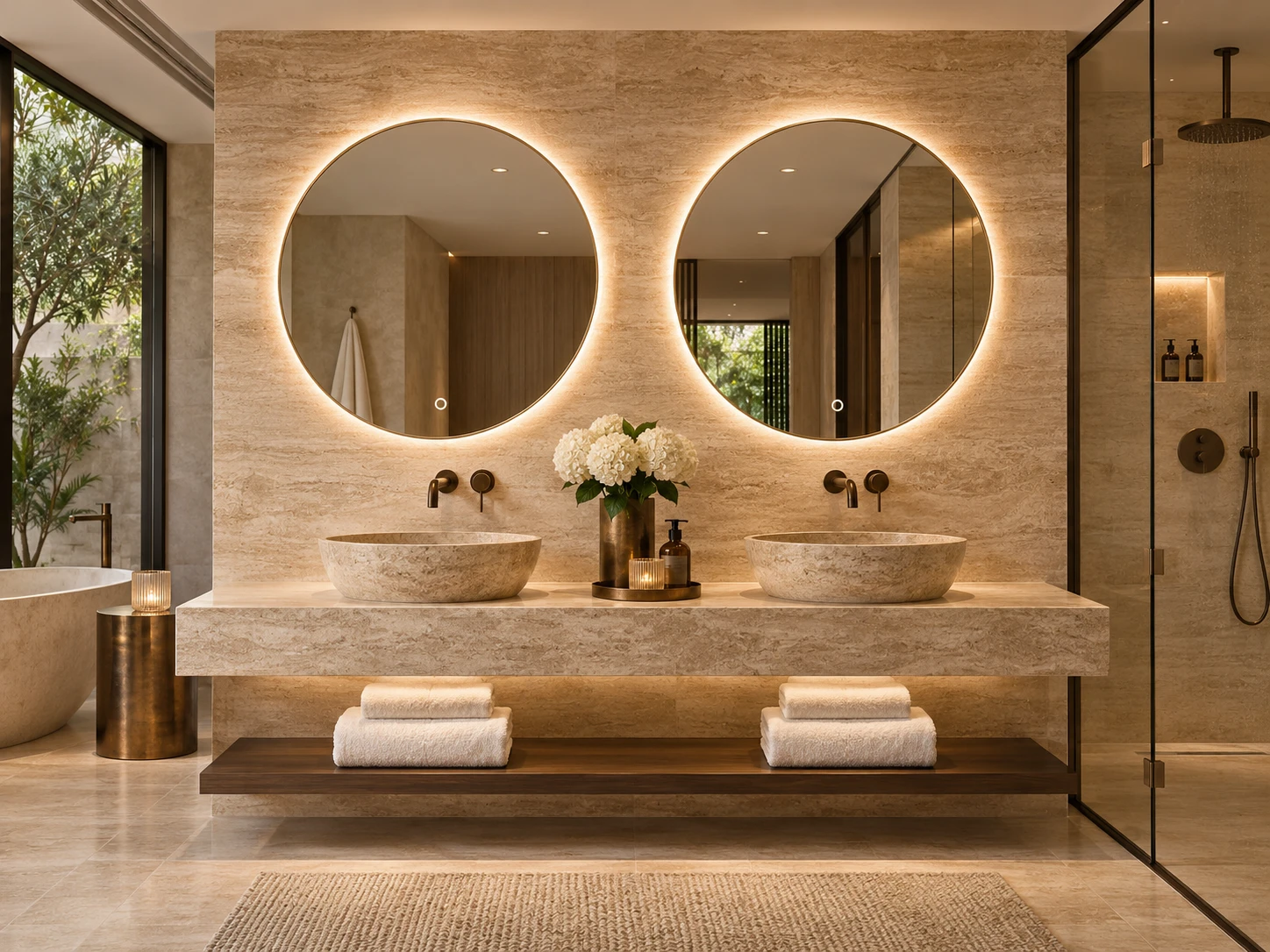
Hotel & apartment projects
For hotel bathroom mirrors, agree what a guest should do at first use. A short instruction, clear sensing position and a consistent sequence help the room design and control brief work together.
For paired mirrors, define whether each unit operates independently. Review the installation in its intended layout before releasing the room package.
Hospitality Mirror SupplyFunctions & timing
Confirm the lighting layout, start-up brightness and any memory requirement with the proposed driver and controller.
Where delayed-off is required, state the requested duration and what should happen when movement is detected during the countdown.
List additional functions and how they should be operated. Shared control, hold actions and independent outputs require sample confirmation.
OEM / ODM sensor mirror development
For private-label brands and distributors, connect the approved control sequence to each product code, user guide and package label.
Select gesture switching or define an approach-based requirement. Add the desired lighting and timing behaviour.
Confirm the proposed sensing technology, position, electrical arrangement and mounting details.
Check response in a representative layout, including off-state, retrigger and power-restoration behaviour.
Agree model codes, quantities, instructions, protection and delivery requirements.
Buyer checklist
| Requirement | Define for quotation | Approve on the sample |
|---|---|---|
| Mirror design | Shape, size, frame and LED layout | Proportion, mounting and reflection area |
| Sensing | User action, position and intended activation area | Response and clearance in the installation |
| Timing | Switching, delay and retrigger requirements | Complete sequence under agreed test conditions |
| Functions | Dimming, CCT, demister and memory brief | Compatibility and operating instructions |
| Project supply | Market, quantities, wall controls and packaging | Agreed configuration and supporting documents |
Motion sensor mirror FAQ
They describe different operating requirements. A close-range gesture switch responds to an intentional hand movement near its sensor. Approach-based control requires a suitable detection arrangement and an agreed response when movement stops. Specify the behaviour before choosing components.
The sensing window and mounting depend on the selected technology, glass preparation and frame construction. Review the exact location and component requirements on the approved drawing.
Describe the intended gesture or approach and the room layout. Confirm the proposed detection range and clearance with the selected sensor and test it in a representative installation.
A delayed-off arrangement can be reviewed for the proposed controller. State the preferred delay and retrigger behaviour. The countdown shown in our online demonstration illustrates the sequence only.
A shared or separate arrangement can be proposed. Agree which output is switched, any timer requirement and how the demister behaves when the lighting changes.
Share the mirror outline, finish, lighting, operation, order mix and destination. The sensor, driver, mounting, instructions and packaging are reviewed as one OEM/ODM configuration.
Compare Touch Control Mirrors → · Explore Anti-Fog Options →
Wholesale / Projects / Private label
Send the dimensions, installation layout and intended user action. Include quantities by model and your destination market.
sales@mymirrorplus.com